The 2025 edition of ASME Section VIII affects both how some new vessels are designed and how manufacturers document design competency. If you are specifying, fabricating, or reviewing an ASME pressure vessel, check the governing edition in the contract and identify which changes apply to the work.
ASME published the 2025 Boiler and Pressure Vessel Code on July 1, 2025. The 2025 edition became mandatory for new construction contracted after January 1, 2026, subject to applicable Code transition rules, project requirements, and jurisdictional adoption. ASME’s Section VIII, Division 1 publication page provides edition information. Confirm the governing edition and its applicability for each project rather than relying on a general date alone.
Two areas deserve particular attention: the rewrite of Mandatory Appendix 47 in Division 1 and the revisions to Part 5, Design by Analysis, in Division 2. They address different issues. Appendix 47 concerns design personnel and manufacturer quality-system controls. Part 5 updates analysis methods and criteria.
Mandatory Appendix 47: A major Division 1 change
When Mandatory Appendix 47 was introduced in 2021, its prescriptive personnel requirements prompted substantial discussion across the industry. The appendix addressed the qualifications and roles involved in vessel design, including “Responsible Charge” and separate “Certifying Engineer” and “Engineer” roles.
I managed the Appendix 47 rewrite for the 2025 edition. The goal was to revise the framework so it better reflects how manufacturers establish and control design competency within their quality systems, while making the responsibilities clearer.
The 2025 rewrite:
Uses performance-based requirements in place of the previous prescriptive qualification approach.
Eliminates references to Responsible Charge within the appendix.
Replaces the separate Certifying Engineer and Engineer roles with one Designer role.
Places final design certification responsibility with the Manufacturer.
Requires the Manufacturer to define and document designer qualification criteria through its Quality Control System.
The change makes the manufacturer’s documented process central to demonstrating that personnel performing design work are qualified for their assigned duties. It does not mean that design competency, review, or documentation can be left informal. Manufacturers should establish how they determine qualifications, maintain supporting records, assign design responsibilities, and verify that the process is followed.
I discuss the reasoning and justification for the rewrite in my paper, “Commentary and Justification for Modifications to Mandatory Appendix 47 in the 2025 Edition of ASME Section VIII, Division 1” (PVP2025-155937).

What Division 1 manufacturers should check
Manufacturers working to the 2025 edition should review their Quality Control Systems and associated design procedures. In particular, confirm that the process defines designer qualification criteria and retains records showing how those criteria are applied. Review who performs design, review, and approval functions, and ensure controlled procedures and forms use the current Appendix 47 terminology.
Owners and engineering firms should also review procurement specifications and vendor qualification documents. If a project specification calls for a particular credential, review that requirement against the revised Code and clarify whether it is an owner requirement, a jurisdictional requirement, or a Code requirement. Appendix 47’s revision does not automatically remove obligations established elsewhere.
Division 2 Part 5: Updated Design by Analysis provisions
The 2025 edition also revises Part 5 of Section VIII, Division 2. The changes include a substantial editorial rewrite for clarity, reinstated bearing and shear stress limits consistent with the 2004 edition, and revisions to fatigue, ratcheting, and creep assessments.
These changes matter when design-by-rules checks do not adequately address a geometry, load path, or service condition. Design by Analysis (DBA) can provide a structured way to assess specific failure modes, but it requires a defined design basis, suitable material data, appropriate load cases, and analysis that follows the applicable Code provisions.
If you are still weighing whether a vessel needs a DBA route at all, my earlier article on Design by Rule vs. Design by Analysis walks through that decision, including the cases where a rule-based check is the better and more economical answer.
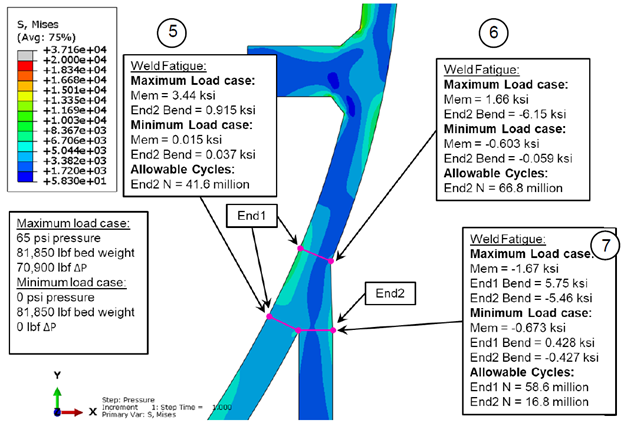
Fatigue assessment updates
The fatigue provisions are harmonized with API 579-1/ASME FFS-1 (2021) approaches. The 2025 edition also adds fatigue screening Method C, which uses structural stress welded fatigue curves. That provides another method for evaluating welded details where applicable; it does not make Method C the default choice for every fatigue assessment.
The method selected should fit the component, weld detail, loading history, and available design information. For cyclic pressure or temperature service, the assessment should define the cycle history and evaluate the locations and details that govern fatigue life.
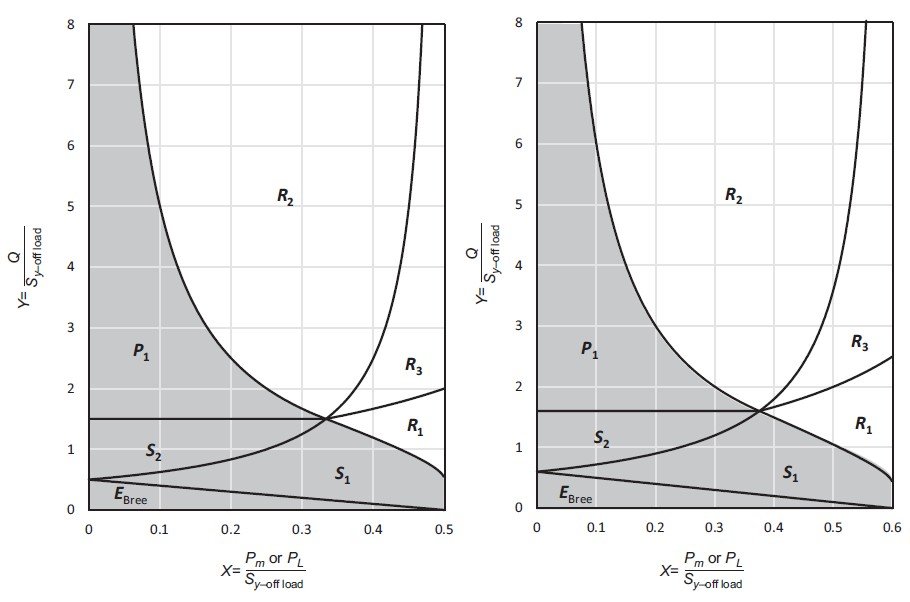
Ratcheting assessment updates
The ratcheting provisions include updated elastic assessment methods, including new methods based on Bree diagrams. These methods provide a route for assessing whether a component under combined sustained and cyclic loading is expected to shake down or experience progressive deformation.
As with other analysis methods, the result depends on the loading assumptions, material behavior, component geometry, and applicable acceptance criteria. A Bree-diagram method may be useful where the load combination and conditions fit its assumptions; it should not be treated as a substitute for understanding the actual service loading.
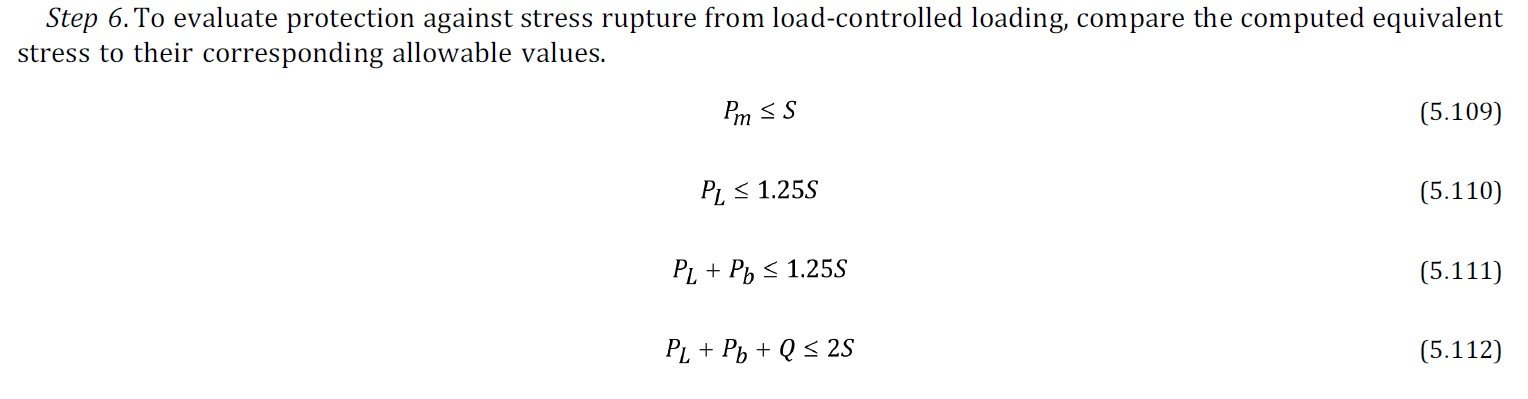
Creep assessment updates
For high-temperature work, the creep provisions are the change many engineers have been waiting for. Earlier editions of Division 2 offered limited creep guidance, so evaluation in the creep regime was often built from Section III practice, API 579, or an in-house method, then justified to a reviewer after the fact. The 2025 edition establishes creep assessment as part of Part 5 in its own right, with requirements for protection against creep damage rather than a short set of notes.
The new provisions address:
Elastic analysis in the creep regime: a defined elastic route, together with the treatment of time-dependent allowable stress used in the ratcheting evaluation.
Creep ratcheting: assessed with the elastic methods, including the Bree-based approach described above.
Stress rupture: evaluated under load-controlled and occasional loads against the applicable time-dependent allowable.
Creep buckling: evaluated using isochronous stress-strain curves, which define strain for a given stress, temperature, and time, rather than relying only on instantaneous elastic properties.
Creep-fatigue: the framework is now established, though a specific analysis method has not yet been published. That gap matters. Where creep-fatigue interaction is credible, the evaluation still needs a documented basis and a clear statement of what the assessment does and does not cover.
In practice, this changes the question for high-temperature equipment from “which method do we borrow” to “does the service sit in the creep regime, and if so, which of these checks apply.” Confirm the metal temperature range against the applicable time-dependent properties, then establish the load and time basis for each check. The isochronous stress-strain curves used for creep buckling are not interchangeable with the elastic-plastic curves from a room-temperature buckling analysis, and they belong in a nonlinear analysis of the type the Code describes.
When the Part 5 changes may help
Updated Part 5 methods are relevant when a design involves complex local stresses, significant cyclic duty, fatigue-sensitive welded details, combined sustained and cyclic loads that require a ratcheting evaluation, or elevated-temperature service where creep damage is credible. They may also help engineers evaluate a design that is difficult to resolve with routine rules-based calculations alone.
The work should proceed in stages: establish the Code edition and design basis; screen the load cases and potential failure modes; then select a detailed analytical method where warranted. A defensible DBA package should document model assumptions, boundary conditions, material properties, load cases, acceptance criteria, and the basis for the conclusion.
Refined Engineering’s mechanical design and analysis services include ASME pressure vessel calculations and Design by Analysis, with FEA where the design warrants it. The specific scope depends on the vessel, applicable Code requirements, and project data.
Practical checks for owners, fabricators, and engineering firms
Industrial owners and mechanical integrity teams
Confirm the Code basis: Identify the governing edition in purchase documents and design specifications.
Review vendor submittals: Check that the manufacturer’s design documentation and certification basis align with the contract.
Clarify additional requirements: Separate project or jurisdictional qualifications from Appendix 47 requirements.
Screen for creep service: Identify equipment operating in the creep regime and confirm the design basis includes the new Part 5 creep provisions.
Pressure vessel manufacturers
Update controlled documents: Review quality procedures, forms, and design workflows for the 2025 Appendix 47 requirements.
Define competency criteria: Document how designer qualifications are established and maintained.
Check design records: Ensure qualification, review, and approval evidence is retained and traceable.
Engineering firms
Align deliverables with the governing edition: Confirm Code references, criteria, and assumptions in calculations and reports.
Select analysis methods deliberately: Evaluate whether the revised Part 5 methods apply to the geometry, service, and available information.
Coordinate responsibilities: Make clear which design, review, and certification activities belong to the Manufacturer and which are separately required by the client or jurisdiction.
A useful next step
The 2025 changes do not call for the same response on every vessel. Start by confirming the applicable Code edition, then identify whether the project falls under Division 1 Appendix 47 controls, Division 2 Part 5 analysis provisions, or both. Review the contract, specification, design basis, and manufacturer’s quality documentation against that scope.
For support with a new design, a complex analysis, or a review of Code compliance, see our mechanical design and analysis services or suitability and compliance assessments.